Posts

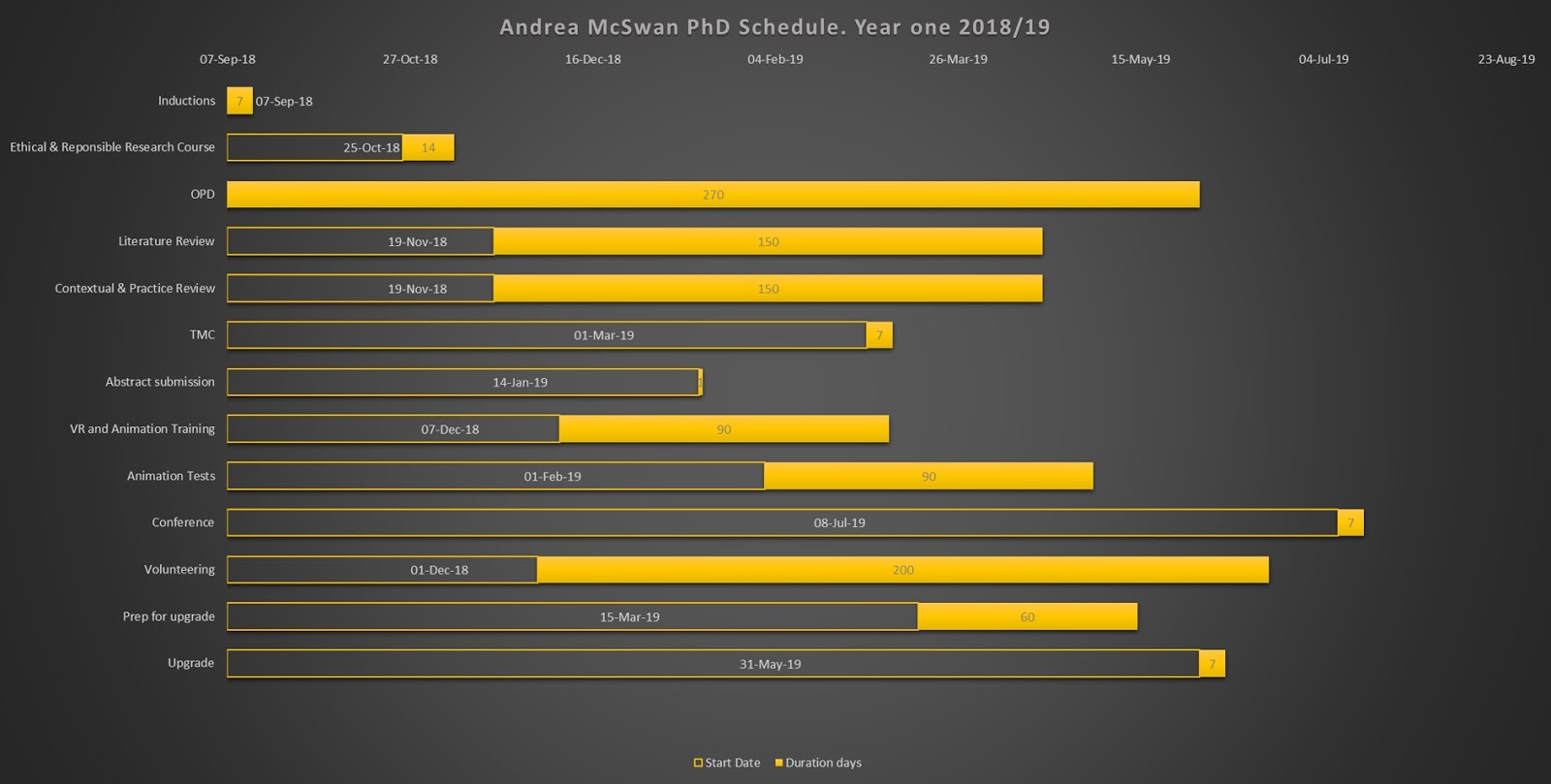
Gantt Chart - Year one schedule

Image

OPD_06: Endnote Training 08/11/18

Endnote notes: Groups - can be set up e.g Chapters Smart Groups - allow specification of particular terms e.g Forensic. The library will then find any text with 'forensic' in it. Any new books/journals etc will be automatically added. 'New Reference' - I can select TV, Book etc Preview shows how the Harvard reference will appear. When the author is part of an institution (corporate author) e.g David Hart University of Dundee, insert a 'comma' at the end of 'Dundee' - so that Endnote doesn't consider UoD as an author Have Endnote open prior to an online search - as Endnote may not automatically launch when trying to import references from a catalogue or reading listed. Endnote online is not as fancy as Endnote but we can access at home. Sync home with UoD desktop. Create keywords for my search - look for synonyms, variant spellings, keywords, all ways to describe subject, combinations - and then search database. Once searching in a databas...
OPD_05: Honey and Mumford Learner Types Questionnaire

Image
Honey and Mumford Learning Styles Questionnaire  https://resources.eln.io/honey-mumford-learner-types-1986-questionnaire-online/ As part of the complete researcher launchpad we were given the task of completing the Learning Styles questionnaire. The exercise was a tool to reveal where our learning style is strong and therefore how we learn best, plus to reveal where we are weak and action points to strengthen those areas to become a well rounded researcher. My scores revealed a very strong preference for 'activist', next was 'pragmatist' and the weaker areas were 'reflector' and 'theorist'. Below are the action points that I've taken from the suggestions in the questionnaire...now printed off and on the wall above my computer! reflector ponder alternatives - always identify and actively consider at least three possibilities theorist set some specific objectives and influence events in light of the desired outcome. Be more purposeful a...

OPD_05: - researcher launchpad. PhD networking tips

Notes and tips for networking Go to departmental seminars Connect and befriend post-doctoral researchers Set up a writing or review circle. 2 or 3 people to meet every three months to share thoughts Get a mentor - and ask to meet for a coffee every few months Join social PhD networking e.g twitter, Thesis Whisperer

OPD_05: The Complete Researcher launchpad - IRON TRIANGLE

Image
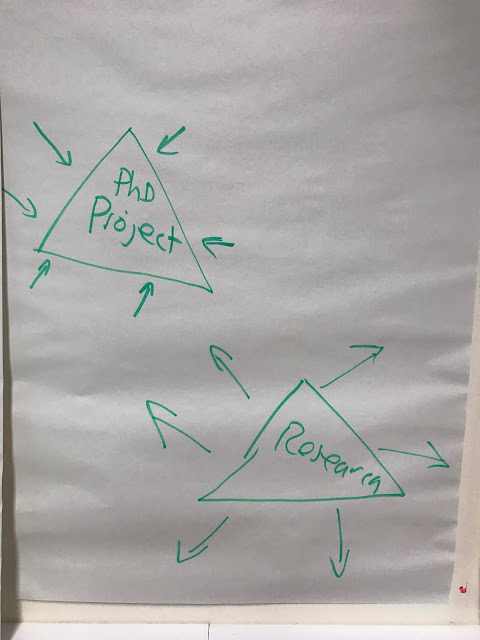
A  PhD is a project. Research isn't! Iron triangle of project management... The three parameters below limit or enable quality... Diagrams drawn and provided by Tracey Stead Schedule (Time)    i)  what is the end (Viva) date? Write it on the wall now! How many days? ii)  what are the deadlines or immediate horizons? Upgrade? TMC? Literature Review? Thesis? Viva? iii) ask other PhD research students to share their experience of timelines and allowances for pilots,testing, public engagement etc Cost (Resources) i)   previous information and data ii)  people iii) money iv) equipment/facilities Scope (function) of a PhD What does it need to do? What's the output? What does it look like? Thesis? Expectations? Papers & Reports Films Good scoping questions.. What? How? Why? Who? When What is good enough?  Use good creative thinking to 'limit' PhD - and to NOT keep adding to the scope. Kno...

OPD_05: The complete researcher launchpad: neighbouring disciplines & PhD in perspective

Image
OPD: The Complete Researcher Launchpad 6th November. Full 6 hour training day covering what a PhD means, what a PhD and the research student need to deliver; plus demonstrations and examples of extensive ranges of source materials, exercises, mind-map and learning tools. Notes and Key Points: PhD =  1) New Contribution to Knowledge             2) Learn how to become an independent researcher. Qualified to teach other researchers. Matt Might's illustrated Guide to the PhD info graphic.  https://mymodernmet.com/phd-infographic-matt-might/ Theory of Marginal Gains Daily Task: Create habit. Every day do something detailed and do something about the big picture. Maybe something removed from research activities and not related. In my monthly/daily routine how do I do this? Specialist and Neighbouring Disciplines Which discipline does my research sit within? What skills will I bring? Who are my discipline 'neighbours'? Are they c...

Thesis Monitoring Committee (TMC)

Thesis monitoring exists for the benefit of the student. The main purpose of the Thesis Monitoring Committee (TMC) is to explore issues relating to their progress, training, personal or other concerns that have arisen during the course of their MPhil or PhD, in an informal confidential arena with a small committee independent of supervisors. Please note that in this document, DJCAD refers to the Duncan of Jordanstone College of Art & Design; TMC refers to Thesis Monitoring Committee. Purpose of TMC The purposes of these committees are:  To fulfil the University’s responsibilities to ensure that regular monitoring of the progress and welfare of each of its research students is conducted.  To give students the opportunity to voice any concerns or opinions relevant to their progress and opportunities.  To facilitate Duncan of Jordanstone in updating its understanding of the work of its research students and in identifying further opportunities for research.  To facilitat...